Toho Technology
FLX-2320-S
Provisional entry — research in progress
This page was generated automatically from cited public sources and hasn't completed the full research pass yet. Every specification shown carries its source; more detail is added as research completes.
The Toho Technology FLX-2320-S measures the change in the radius of curvature of a substrate to determine thin film stress.[1]
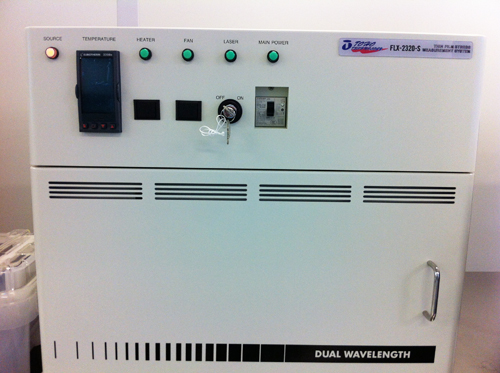
Plate 01KLA-Tencor FLX-2320 Film Stress Measurement System (ID# 4344)
ClassOneEngineeringWatch on YouTube
How it works
The operating principle of the FLX-2320-S is based on the Stoney relationship, which correlates film stress to the change in substrate curvature before and after deposition. The radius of curvature is measured prior to film deposition (initial radius R1) and after deposition (new radius R2). The effective radius R is derived from these two measurements and is used to compute the stress.[1]
What can it run?
Process applications and technology nodes documented for this tool.
- Thin-film stress measurement
What do the numbers mean?
Wafer handling3
- Measurement principle
- Measures the change in the radius of curvature of a wafer or substrate caused by deposition of a stressed thin film.[1]
- Measurement principle
- Measures the change in radius of curvature of substrate before and after film deposition[1]
- Function
- Measures the change in the radius of curvature of a wafer or substrate caused by the deposition of a stressed thin film.[1]
Configuration & options2
What replaced it?
Related models
- siblingNanospec AFT-6100— Listed in the same optical measurement section of the EPFL CMi equipment portfolio as the Nanospec AFT-6100.source[2]
Where are the manuals?
Generated from public-source data on file. Enter your email to access — nothing is published; details are routed privately.
Not publicly documented
Field notes
No research found yet — worked with this tool? Share what you know.
Frequently asked questions
What does the FLX-2320-S measure?
It measures the change in the radius of curvature of a wafer or substrate caused by deposition of a stressed thin film.[1]
What does the instrument calculate from that measurement?
It is used to determine thin-film stress using the substrate's biaxial elastic modulus, substrate thickness, film thickness, and radius of curvature.[1]
When must the radius be measured?
The radius has to be measured before and after the deposition.[1]
What is one stated use of the calculator provided with the system page?
It can be used to calculate the film thickness required to correct the bow of a substrate.[1]
Not publicly documented
The following facts about the FLX-2320-S are absent from this record as of this revision. First-hand knowledge or a citation closes a gap; every submission is reviewed before publication.
No publicly documented production dates or lifecycle milestones (introduction, end of production, EOL) for the FLX-2320-S are on record.
Answerable by: OEM historical records or a trade-press announcement
No publicly documented variants, configuration options, or revision breakpoints of the FLX-2320-S are on record.
Answerable by: an OEM product catalog or an engineer who ordered or specified the tool
The control-system platform and OS era of the FLX-2320-S are not on record.
Answerable by: an engineer who operated it or OEM installation records
No publicly documented failure modes or field errata for the FLX-2320-S are on record.
Answerable by: a field service engineer, process engineer, or maintenance technician
The process node or technology generation of the FLX-2320-S is not on record.
Answerable by: an OEM datasheet or a fab qualification report
No research found yet — worked with this tool? Share what you know.
Sources & citations
Last updated Oct 8, 2026.
Compare with similar tools
View all →The KLA .204 PSL Wafer is an 8-inch NIST-traceable reference wafer compatible with Surfscan 6xy0 and Sp1 particle counters.
KLA .496 PSL Wafer is an 8-inch NIST traceable wafer stated to be capable on Surfscan 6xy0 and SP1.
The KLA .498 PSL Wafer is a NIST traceable reference wafer.
